
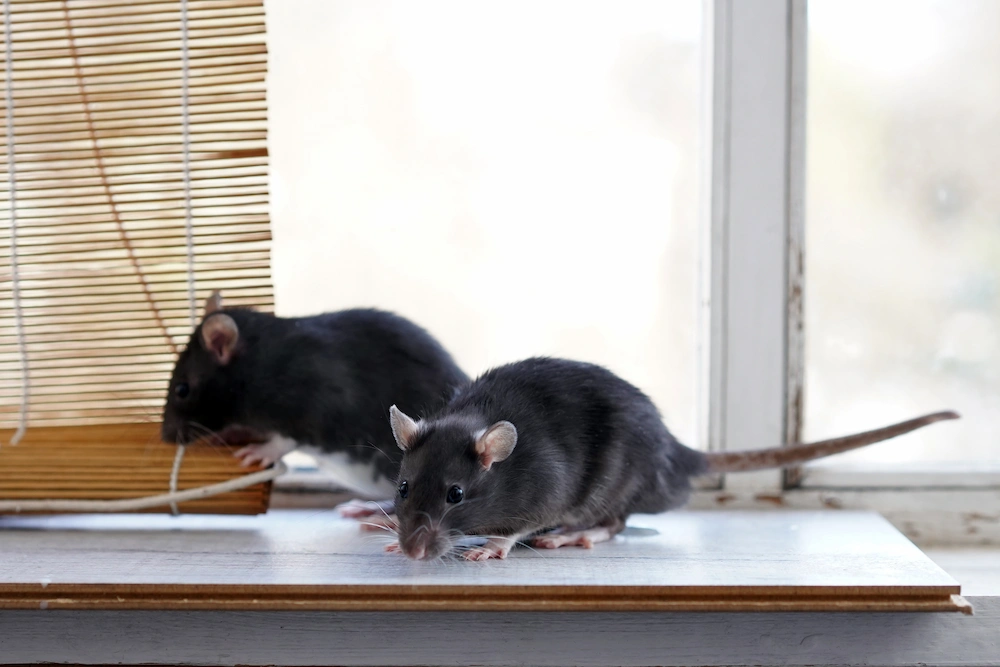
Summary: Roof rats rarely confront people, but their bites can become infected, their droppings and urine can contaminate food and surfaces, and their chewing can damage attic wiring and insulation. This guide explains the health and property risks for Valley homeowners and practical ways to make a home less appealing to roof rats.
Most people find out they have roof rats from a sound, not a sighting. Something scratches across the ceiling around midnight, or a grapefruit on the backyard tree turns out to be an empty shell with the rind still hanging from the branch. Then the question comes up fast: are roof rats dangerous, or just a nuisance that keeps you awake?
The honest answer is that they can be both. This article covers how roof rats differ from other rodents around Phoenix, the health risks tied to bites and droppings, the damage they can do in an attic, and the steps that lower the risk for your family, your pets, and your house.
How Roof Rats Live Differently From Other Valley Rodents

Roof rats are climbers. Where a house mouse stays close to the floor and a packrat builds its nest of sticks and debris at ground level, a roof rat would rather travel above your head. They run along the tops of block walls, cross on utility lines, and climb palm trunks and citrus branches to reach a roofline.
They are slender, dark brown to black, with a tail longer than the head and body combined. Large ears and a pointed nose set them apart from the stockier Norway rat. They are mostly active at night, which is why many homeowners hear them for weeks before they ever see one.
Why Citrus and Palms Draw Them In
Mature citrus trees give roof rats nearly everything they need in one spot. The fruit is food, the dense canopy is cover, and branches that brush the roof or a wall create a ready-made bridge to the house. Fallen fruit left on the ground for days adds another easy meal.
Untrimmed palms work the same way. The skirt of dead fronds that builds up under the crown makes a sheltered, hard-to-reach nesting spot, and from there it is a short climb to the eaves.
Signs That Point to Roof Rats Specifically
Hollowed-out oranges or grapefruit still attached to the tree are a classic roof rat sign. So are droppings in the attic or garage that are dark and pointed at the ends, along with greasy rub marks where their bodies brush along beams, pipes, or the top of a wall.
Nighttime scratching or scurrying in the ceiling, chewed pet food bags in the garage, and gnawed edges on vents or fascia boards are other clues. Any one of these alone is not proof, but two or three together usually mean rats have found a way in.
Are Roof Rats Dangerous to People and Pets?
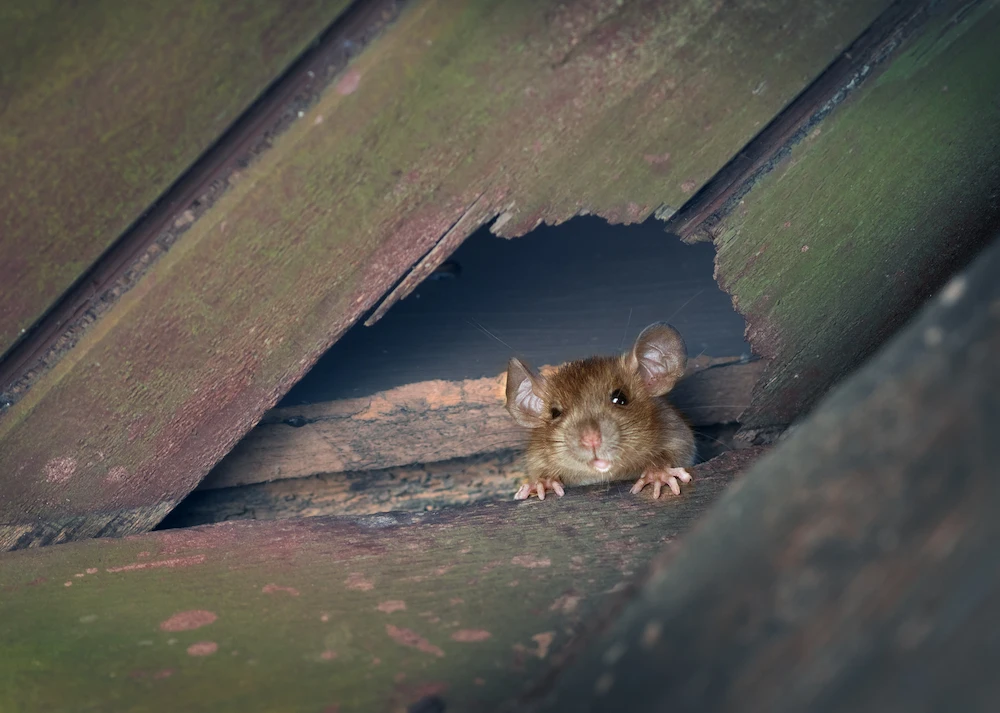
Roof rats are not aggressive toward people. Given a choice, they will run and hide. The real risks come from where they travel, what they leave behind, and what happens when someone corners one or reaches into a nest without knowing it is there.
Bites and Scratches
Bites are uncommon, but they do happen, usually when someone tries to grab a rat, clears out a cluttered storage area, or handles a trap that has not fully done its job. Children and pets are more likely to approach a rat out of curiosity, and a cornered rat will defend itself.
Any rat bite can become infected, even a small one. Wash the area well with soap and water, then contact a doctor or urgent care right away for advice on wound care and whether further treatment is needed. Do not wait to see how it looks in a day or two.
Droppings, Urine, and Contaminated Food
This is the risk that affects far more households than bites do. Rats leave droppings and urine wherever they travel, including pantry shelves, kitchen counters, attic insulation, and the tops of stored boxes. Rodents can carry diseases, and their waste can contaminate food and the surfaces it touches.
A few practical rules help here:
- Throw out any food in packaging that shows gnaw marks or droppings, even if the inside looks fine.
- Do not sweep or vacuum dry droppings, since that can stir particles into the air. Wear gloves, wet the area with a disinfectant first, then wipe it up.
- Wash hands thoroughly after any cleanup, even when gloves were worn.
- Keep children and pets away from the area until it has been cleaned.
For a large buildup in an attic or garage, professional cleanup is often the safer route. If anyone in the home develops unexplained fever or flu-like symptoms after rodent exposure, let a doctor know about the rats so they have the full picture.
Fleas, Mites, and Your Pets
Rats can bring fleas and mites into an attic or garage, and those parasites do not always stay with the rat. Dogs and cats that chase or catch rodents can also pick up parasites or get bitten in the process. If a pet has tangled with a rat, a call to your veterinarian is the smart move.
Pets also raise the stakes on how rats get controlled. Rodenticides placed carelessly can harm dogs, cats, and wildlife, which is one reason Green Mango uses a combination of trapping, exclusion, and eco-friendly rodenticides placed to limit harm to non-target animals.
What Roof Rats Can Do to an Attic
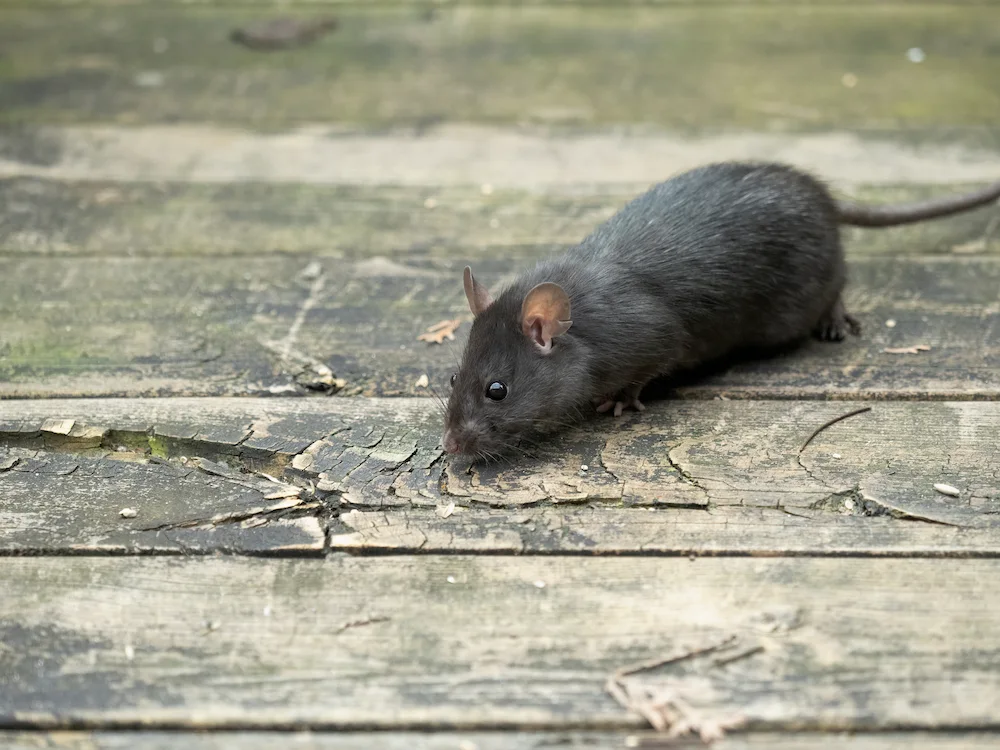
A rodent’s front teeth grow continuously, so gnawing is part of daily life for a rat. Inside a house, that habit gets expensive. The attic is where roof rats most often settle, and it is full of materials they can chew, shred, and soil.
Chewed Wiring and Fire Risk
Rats chew on electrical wiring in attics and walls, sometimes stripping insulation down to bare wire. Damaged wiring can create a fire hazard, and the problem is often hidden until an outlet stops working or an electrician finds it during unrelated work. If you have had rats in the attic for a while, ask an electrician to look at any wiring that runs through the areas where you have found droppings.
Insulation, Ductwork, and Odors
Rats tunnel through blown-in insulation and pull it apart for nesting material, which leaves bare spots and contaminated patches above the ceiling. They can also chew into flexible ductwork, and a torn duct in a Phoenix attic means cooled air leaking into a very hot space for much of the year.
Odors are another sign of a long-term problem. Urine soaks into insulation and wood over time, and a rat that dies inside a wall or above a ceiling can leave a smell that lingers well after the infestation itself is gone.
Damage Outside the House
Outside, roof rats gnaw on fascia boards, roof vents, and the screens on gable vents to widen an entry point. In the yard, they damage fruit on citrus trees, raid vegetable gardens, and chew into irrigation lines. None of this is dangerous on its own, but it is often the first visible sign that a colony is living close by.
Making Your Property Harder for Roof Rats to Use

Rats move in because a property offers food, water, shelter, and an easy way up. Taking away even a couple of those makes a real difference, and the cooler months are a comfortable time to do the outdoor work.
Trim the Highways
Cut back citrus branches, shrubs, and vines so they sit several feet away from the roof and walls. Trim the skirt of dead fronds from palms, and keep bougainvillea and other dense climbers from growing onto the roofline. If a rat has to jump a long gap or climb a bare wall, the house becomes a lot less convenient.
Clean Up Food Sources
Pick up fallen citrus every day or two during the season, and harvest ripe fruit instead of leaving it on the tree for weeks. Bring pet bowls inside at night, store pet food and birdseed in sealed metal or heavy plastic bins, and clean up spilled seed under bird feeders. Fix dripping hose bibs and leaky drip emitters, since a steady water source helps rats stay put through the hot months.
Close the Gaps
Rats can squeeze through surprisingly small openings, so look closely at the roofline, vents, and the places where pipes and cables enter the house. Damaged vent screens, gaps under garage doors, and openings around AC line sets are common entry points. Exclusion work has to be done carefully, though, because sealing rats inside an attic creates a new set of problems.
Why Store-Bought Traps Often Fall Short
A couple of snap traps in the garage can catch a rat or two, and that early win often convinces people the problem is solved. Roof rats breed quickly, though, and the ones you catch are usually the boldest of the group. If the scratching returns a week later, the colony is still there and the entry point is still open.
Placement matters as much as the trap itself. Roof rats travel along beams, wall tops, and pipes rather than across open floors, so traps set in the middle of a room often go untouched. Keep any traps and baits well out of reach of kids and pets, and check them daily so a caught rat does not sit in the attic.
That is where an inspection helps. Green Mango’s rodent control in Phoenix starts with finding entry points, nesting areas, and the extent of the activity, then builds a plan around what the inspection turns up.
Getting Ahead of Roof Rats in Phoenix, Chandler, and Mesa

So, are roof rats dangerous? They are shy animals that rarely confront people, but their bites can become infected, their droppings and urine can contaminate food and surfaces, and their chewing can damage wiring and insulation. The earlier they are dealt with, the less cleanup and repair tends to follow.
If you are hearing scratching overhead, finding hollowed fruit on the tree, or spotting droppings in the garage, it is worth having someone take a look. Homeowners can book an inspection for rodent control in Chandler, and Green Mango also serves Phoenix, Mesa, and Casa Grande with trapping, exclusion, and ongoing monitoring to help keep rats from coming back.
For a free quote on our tried-and-true rodent control services, contact us today!
Citations
Roof rat information. (n.d.). City of Tempe. Retrieved November 9, 2026, from https://www.tempe.gov/government/city-manager-s-office/neighborhood-services/pest-animal-and-invasive-weed-issues/roof-rats/roof-rat-information