
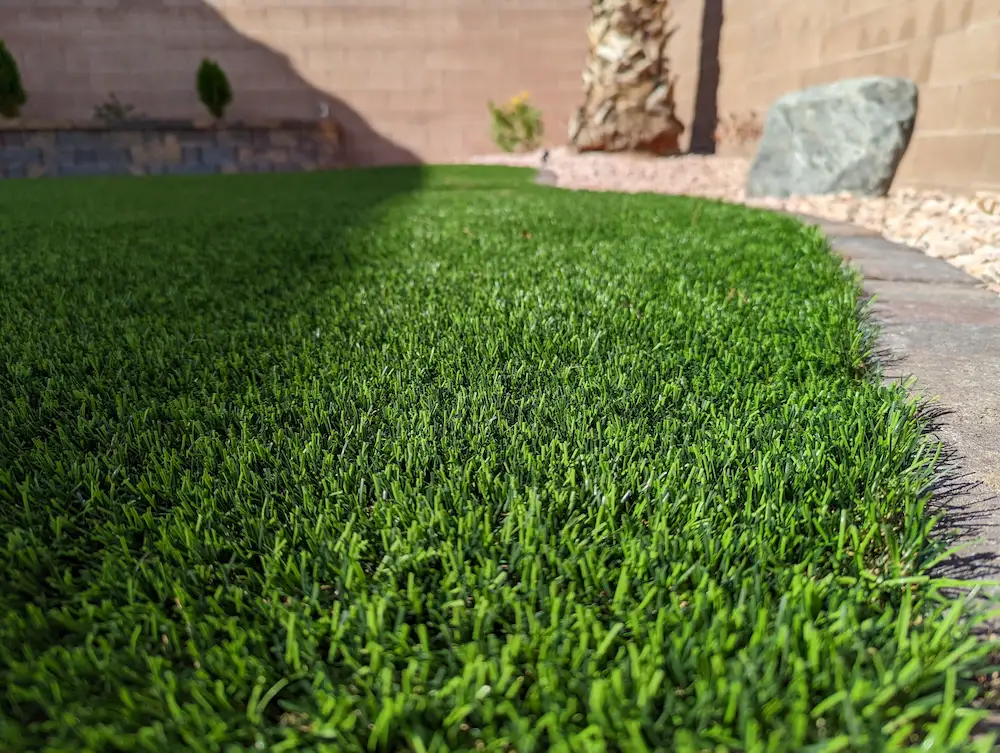
Summary: Artificial turf does not feed most household pests, but its edges, nearby soil, irrigation, debris, and protected spaces can support ants, beetles, crickets, and the predators that follow them. This guide explains what Arizona homeowners should watch for and how routine turf maintenance can reduce pests in artificial turf.
Artificial turf makes a lot of sense in Arizona. It stays green through brutal summer heat, cuts down on lawn maintenance, and gives backyards a clean look without the watering schedule that natural grass demands. But there is one misconception worth clearing up: replacing grass with turf does not make a yard pest-proof.
The turf fibers themselves are not what most pests are after. The real attraction is the environment around and beneath the installation. Shade, protected edges, trapped debris, nearby irrigation, and pockets of soil can give insects exactly what they need. That is why pests in artificial turf can become a surprise for homeowners who assumed synthetic grass would leave bugs with nowhere to go.
Why a Fake Lawn Can Still Feel Like Real Estate to a Bug
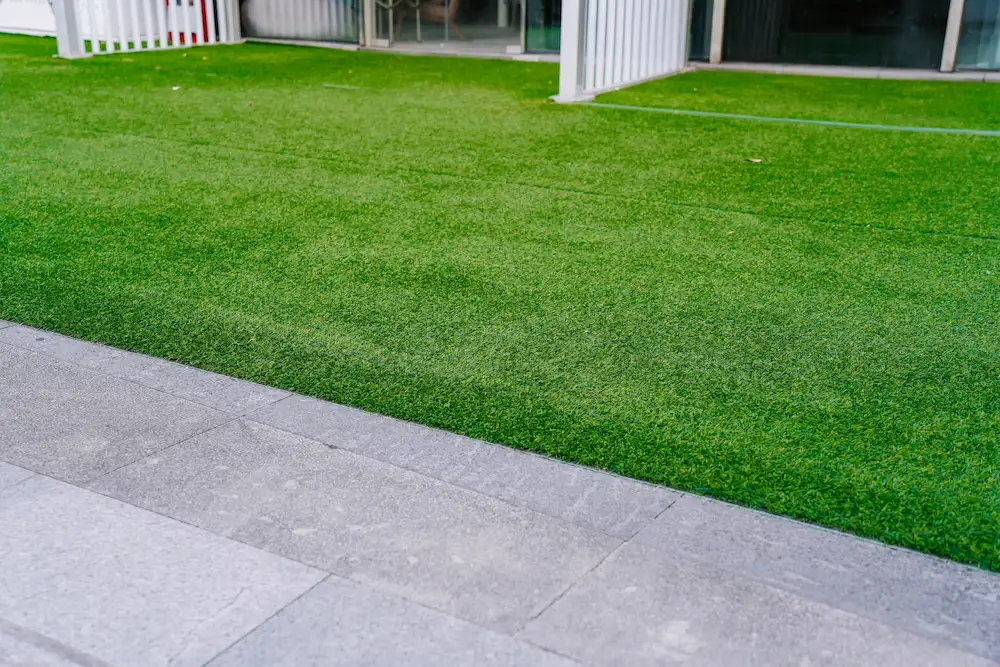
A natural lawn gives insects soil, roots, moisture, and organic material. Artificial grass removes some of that, but it also creates a different type of habitat. The surface sits above a prepared base, while seams, borders, pavers, and landscape edges create small protected spaces that are easy for crawling insects to explore.
Those protected areas matter in Arizona. Exposed soil, concrete, and rock can become extremely hot during the day. A narrow shaded space beside turf or beneath an edge can offer relief from direct sun, especially when there is moisture nearby. In other words, bugs in artificial grass are usually responding to the conditions around the turf rather than developing a sudden appetite for synthetic fibers.
The installation also tends to stay relatively undisturbed. Nobody is mowing it every week or turning over the ground underneath. For pests that prefer tucked-away spaces, that stability can make certain sections of a synthetic lawn useful for hiding or traveling.
Ants Are Usually the First Ones to Figure It Out
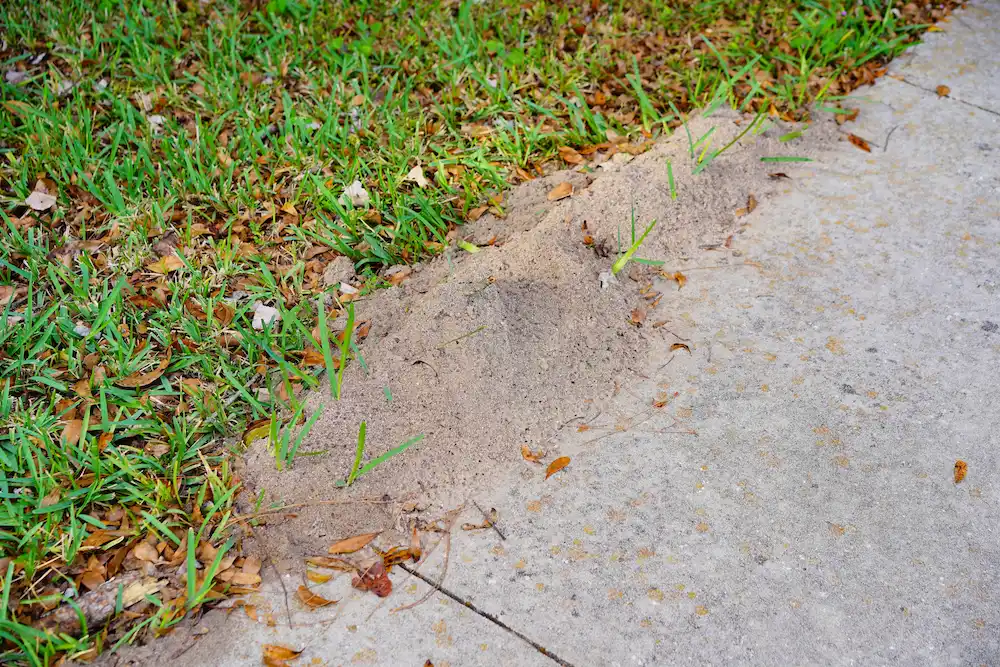
If there is one pest that knows how to take advantage of tiny spaces, it is an ant. Colonies can remain in soil beside or beneath a turf installation while workers use edges and seams as protected travel routes. You may notice a line of ants disappearing beneath the turf, moving along a paver border, or heading from the yard toward the foundation.
Finding ants in artificial turf does not necessarily mean the colony is living directly underneath the entire lawn. The nest may be in an adjacent planter, beneath a hardscape edge, around an irrigation line, or in another patch of soil. Workers can travel surprisingly far when they have located a dependable food or water source.
Why Arizona Yards Give Ants Plenty of Reasons to Stay
Even when the lawn itself is dry, the landscaping around it may not be. Drip irrigation, flowering plants, pet bowls, outdoor kitchens, fruit trees, and garbage areas can all keep ants interested in the property. Once they are already active near the turf, cracks around doors or utility penetrations can become the next stop.
If ant trails keep returning to the same part of your lawn, the goal should be to identify where the colony is coming from rather than repeatedly removing the workers you can see. Green Mango’s ant control services can help address recurring activity by looking beyond the visible trail and considering where ants may be nesting or gaining access around the property.
Beetles, Crickets, and the Food Chain Hiding in Plain Sight
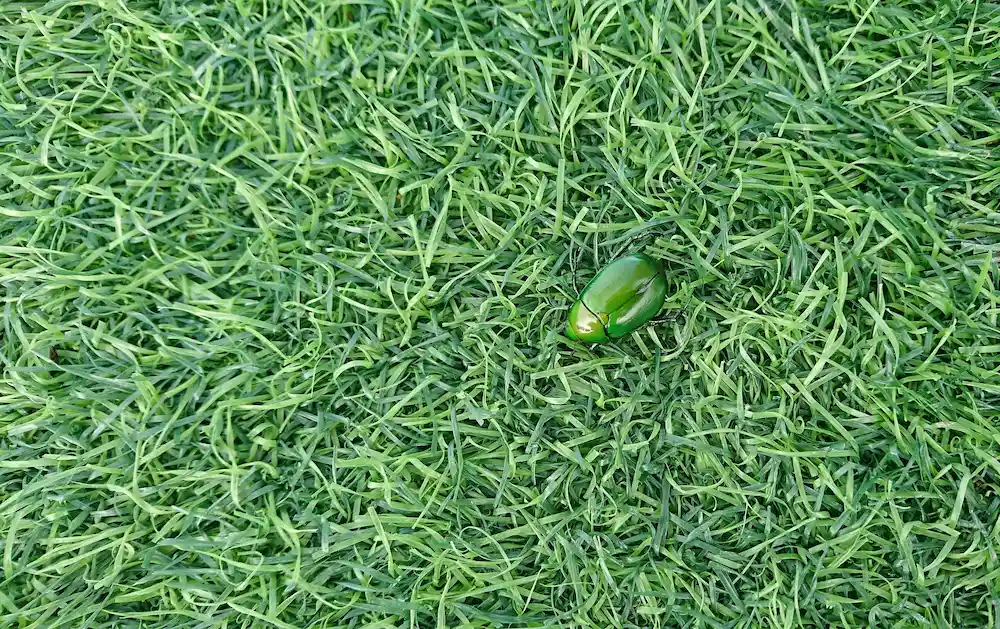
Beetles in artificial turf are another possibility, although the turf itself is rarely the prize. Leaves, seed pods, dead insects, pet waste, and other organic material can settle between the blades or collect where synthetic grass meets walls and pavers. Depending on the species, a beetle may be looking for shelter, food, or smaller organisms living in that debris.
Crickets can use similar hiding spots. They favor protected spaces and can gather around landscaping, irrigation boxes, block walls, and other features common in Arizona yards. When those insects become plentiful, they can also attract predators that would rather eat the bugs than live in the turf.
When One Pest Brings Another
This is where a simple turf issue can become a bigger yard issue. Spiders follow prey. Scorpions also feed on insects, including crickets and other small arthropods. A yard with steady insect activity can therefore support more than one unwanted species.
A scorpion crossing synthetic grass does not mean artificial turf caused the scorpion problem. It may simply be moving through an area where prey is available or where nearby landscape features provide cover. Looking at the entire yard gives you a much clearer picture than treating the turf as an isolated surface.
The Most Important Part of Your Turf Is the Part You Cannot See
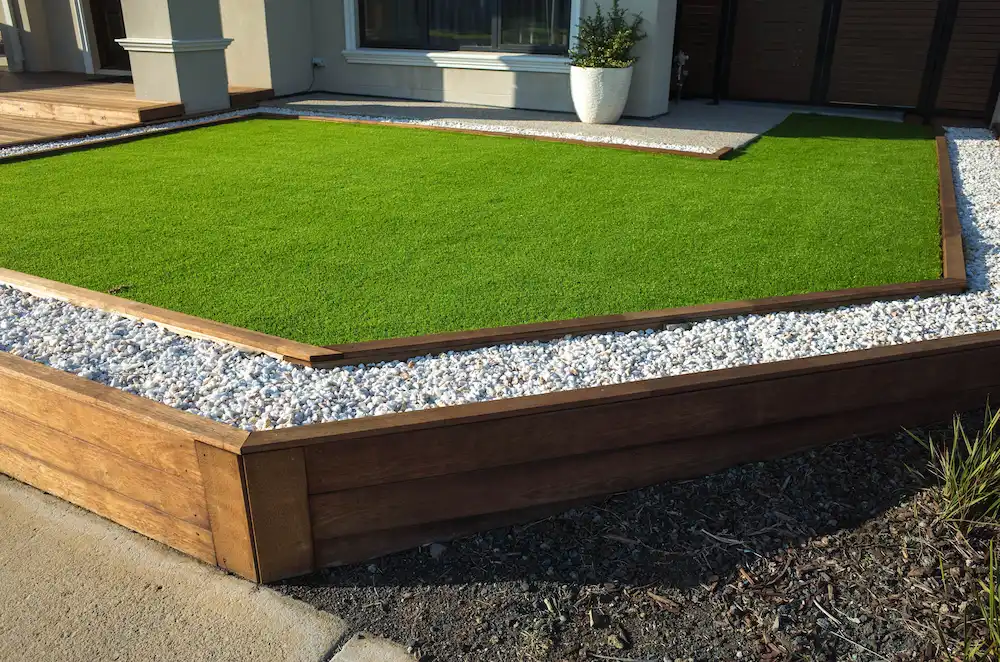
When homeowners ask, does artificial turf attract bugs, the better question is what is happening underneath and around it. Good installation and drainage matter because persistent moisture can turn an otherwise dry section of the yard into a reliable resource for insects.
Artificial grass does not need irrigation, but neighboring plants often do. A leaking drip emitter, runoff from a planter, or drainage that keeps one edge damp can create a small oasis during hot weather. In Arizona, dependable moisture is valuable. Ants, roaches, crickets, and other pests do not need a backyard pond when a consistently damp strip of soil will do.
Pet Turf Needs Its Own Routine
Synthetic lawns are popular in yards with dogs because they are easy to use year-round, but pet areas need regular attention. Waste left behind adds organic material, while residue and odors can attract flies and scavenging insects. Rinsing and cleaning turf according to the installer’s recommendations can help keep those attractants from building up.
The same idea applies to food. If kids snack on the turf, the family eats outside, or a grill sits nearby, crumbs and spills should not be allowed to settle into the blades. A synthetic lawn may look clean from standing height while still holding enough debris near the base to interest foraging insects.
Give Your Artificial Lawn a Five-Minute Pest Check
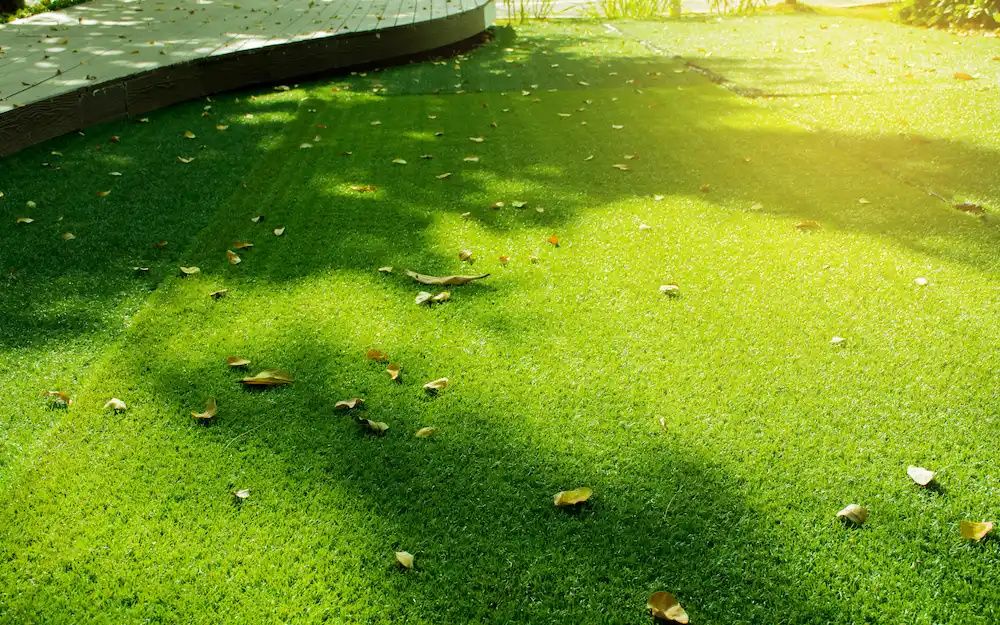
You do not need to pull up sections of turf every weekend. A quick inspection around the places pests are most likely to use can tell you a lot. Walk the perimeter in the morning or evening, when many insects are easier to spot, and pay attention to repeated activity rather than one random bug crossing the yard.
Focus on the places where one material meets another. Turf-to-paver transitions, block walls, utility boxes, planters, door thresholds, and foundation lines are more informative than staring at the center of the lawn.
A quick maintenance check can include:
- Brush away leaves, seed pods, and other debris collecting along turf edges.
- Check nearby drip lines and irrigation emitters for leaks or persistently damp soil.
- Look for recurring ant trails, burrowing, or insects disappearing beneath the same seam.
- Remove pet waste promptly and keep outdoor food and trash contained.
- Trim dense plants that create shaded bridges between landscaping and the house.
These habits address the resources pests actually care about. When recurring activity involves more than one type of pest, Green Mango’s pest control services can help identify activity around the home and yard and determine where pests may be finding food, shelter, moisture, or access.
Do Not Blame the Turf Before You Check the Rest of the Yard
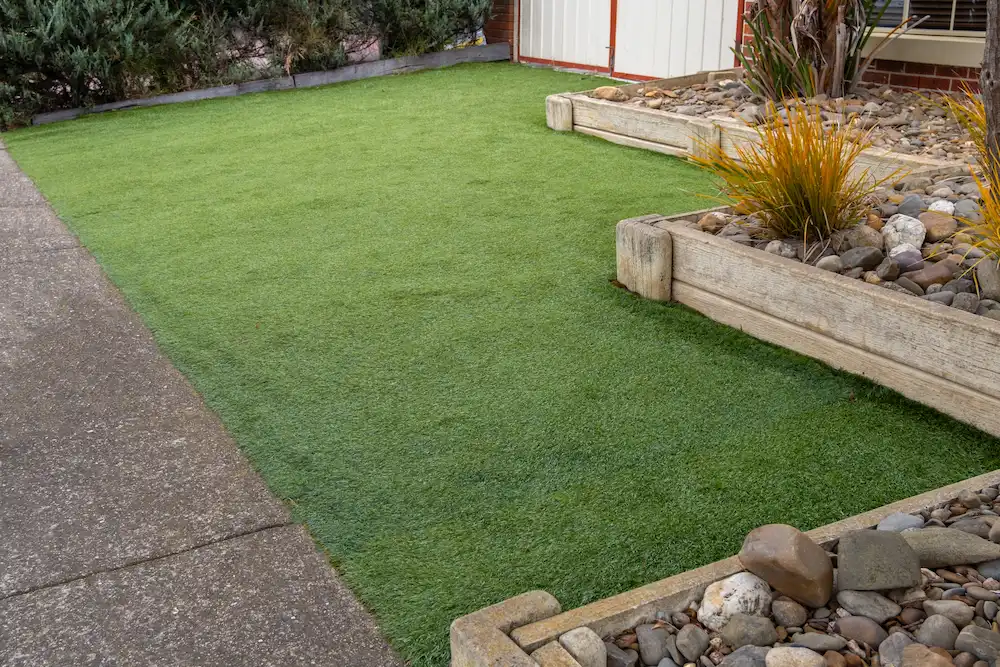
Artificial turf often gets blamed because it is where homeowners happen to notice the pest. But a trail of ants may originate in a planter several feet away. A beetle may be feeding on debris trapped along the fence. A scorpion may be crossing the lawn because crickets are hiding around a block wall. The visible location and the actual source are not always the same.
That distinction matters when considering pest control for artificial turf. Treating the patch where you saw an insect may do very little if moisture, nesting areas, or food sources remain untouched nearby. A better approach is to trace activity outward and look at the property as one connected environment.
Avoiding Pests in Artificial Turf
Artificial turf can still be a practical choice for Arizona yards. Keep the turf clean, stay on top of irrigation problems, watch the borders, and pay attention when the same pest keeps showing up in the same place. Understanding these conditions is especially useful when dealing with artificial turf pests in Arizona, where heat and limited natural moisture can make protected areas around a property particularly valuable to insects.
Contact us for a free quote on our pest control services and keep your yard protected all year long!
Citations
Do you have any ideas what’s growing & crawling in your artificial turf?. (2024, October 10). Dirty Turf. Retrieved August 17, 2026, from https://www.dirtyturf.com/do-you-have-any-ideas-whats-growing-crawling-in-your-artificial-turf/