
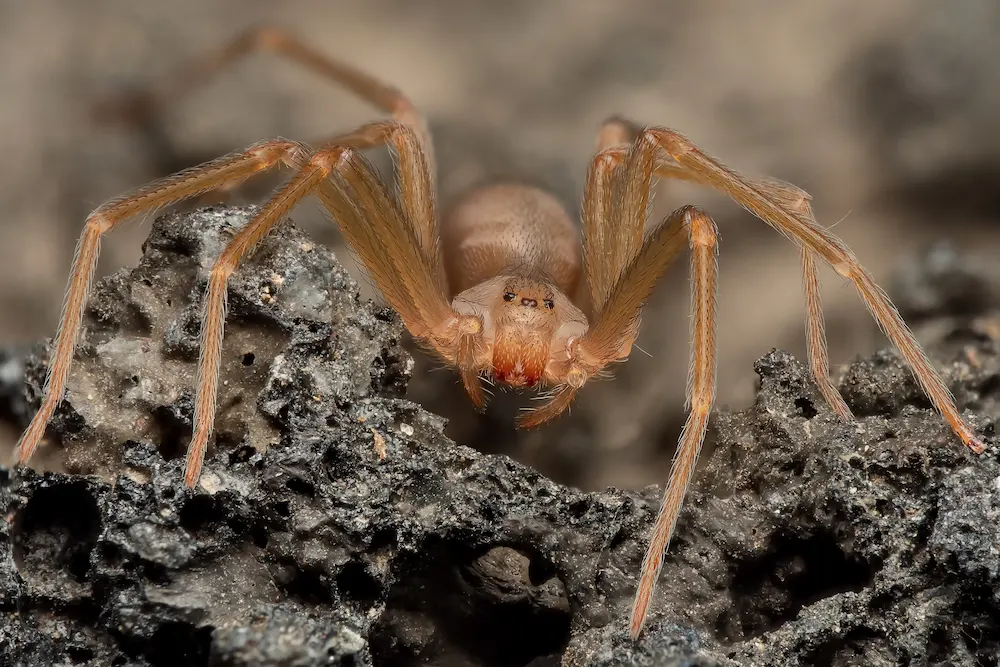
Summary: The Arizona brown spider is a desert relative of the brown recluse that hunts insects at night and hides in packrat nests, woodpiles, and cluttered storage. This guide covers how to identify one, what a bite can mean, and how to make your property less inviting.
Say the words “brown recluse” around the Valley and people get nervous fast. Almost any tan spider found in a garage ends up blamed for it, and the internet is full of photos and stories that make the risk sound bigger than it usually is. The spider most Arizona homeowners are actually dealing with is a desert relative with its own habits.
This article covers what the Arizona brown spider is, how to recognize one, what it eats and where it hides, and what a bite can realistically mean. It also walks through the yard and storage habits that make your property less appealing to it.
A Desert Cousin of the Brown Recluse
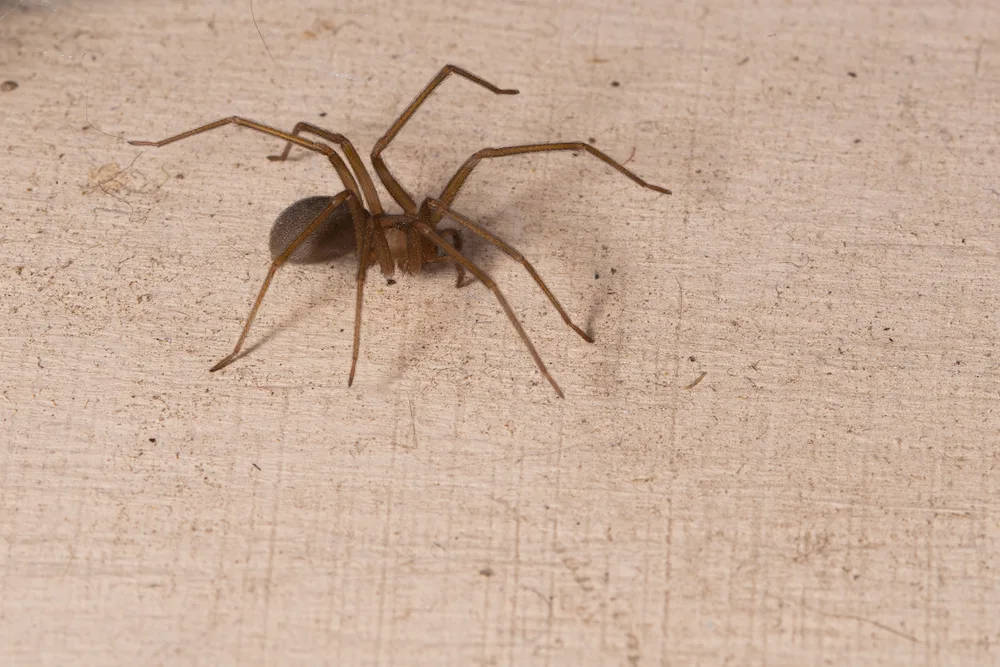
The Arizona brown spider, Loxosceles arizonica, belongs to the same genus as the well-known brown recluse. Spiders in that group are often called recluse spiders, and the name fits. They spend most of their lives tucked away in dark, undisturbed spots and want very little to do with people.
The brown recluse itself is mainly a species of the central and south-central United States. In the low desert around Phoenix, the recluse spider people tend to encounter is the Arizona brown spider or one of a few other desert relatives. So when a neighbor in Mesa says they found a brown recluse behind the water heater, there is a good chance it was its desert cousin instead.
What to Look For
Recluse spiders are plain tan to brown, without stripes, spots, or banded legs. Many have a darker, violin-shaped marking on the front body section where the legs attach, with the neck of the violin pointing back toward the abdomen. On some Arizona specimens that marking is faint, which is part of why so many look-alikes get mislabeled.
The more reliable clue is the eyes. Most spiders have eight eyes, while recluse spiders have six, arranged in three pairs. You need a magnifying glass or a close-up photo to see them, and the safest way to get that look is to trap the spider under a clear jar rather than handling it.
Wolf spiders are the most common mix-up. They are often bigger and hairier, with striped or mottled patterns and a row of large, forward-facing eyes that shine back at a flashlight. Long-legged cellar spiders hanging in ceiling corners also get mistaken for recluses, though their spindly build and wispy webs look nothing alike once you see them side by side.
How They Hunt and Where They Hide
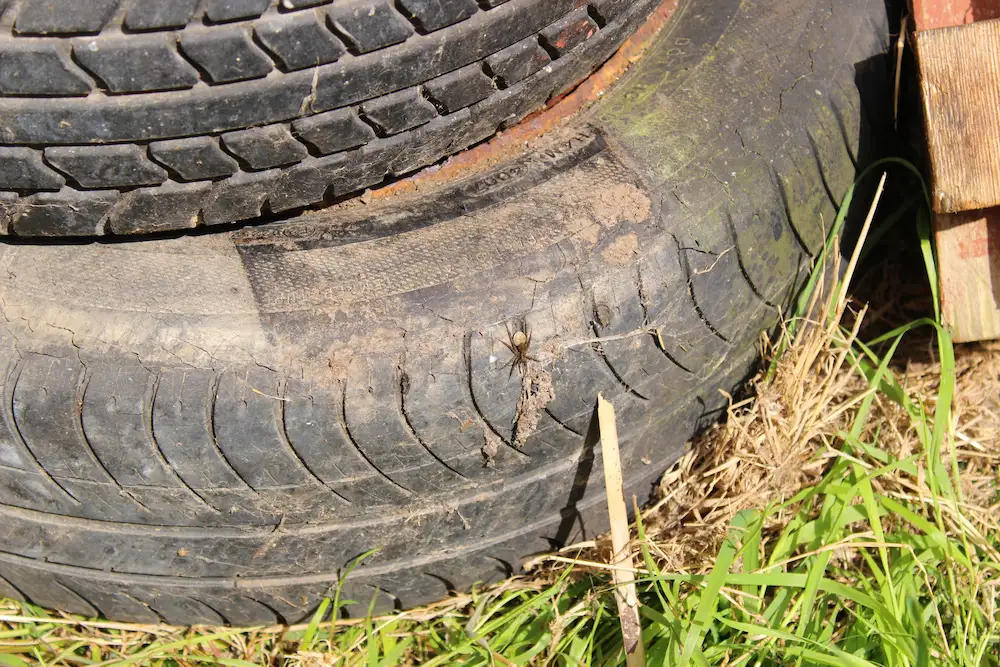
Arizona brown spiders are nocturnal hunters. Instead of waiting in a large web for prey to fly in, they leave their shelter at night and go looking for small insects and other arthropods, things like crickets, silverfish, and other small bugs. Recluse spiders will also scavenge insects that are already dead, and as a group they are known for going long stretches without eating at all.
Their webs are small and irregular, more of a loose, messy retreat than a classic orb web. You will usually find them low and out of sight, in the gap under a board, between stored items, or in the corner of a box that has not been opened in a long time.
Packrat Nests and Other Desert Hideouts
Out in the open desert, these spiders live under rocks, in dead plant material, and in packrat nests. Those nests are piles of sticks, cactus pieces, and debris that stay sheltered and attract plenty of insects, which makes them an ideal home. If packrats have built a nest against a block wall or under a shed, there is a real chance brown spiders are living in it too, and rodent control for the packrats may need to come first.
Around homes, the Arizona brown spider tends to stick to outbuildings and outdoor clutter more than living spaces. Woodpiles, stacked lumber, sheds, garages, and gravel beds near the house all offer the dark, dry cover they prefer. Properties that border open desert, like many on the edges of Casa Grande, tend to see more of them because the natural habitat sits right up against the yard.
What a Bite Can and Cannot Mean
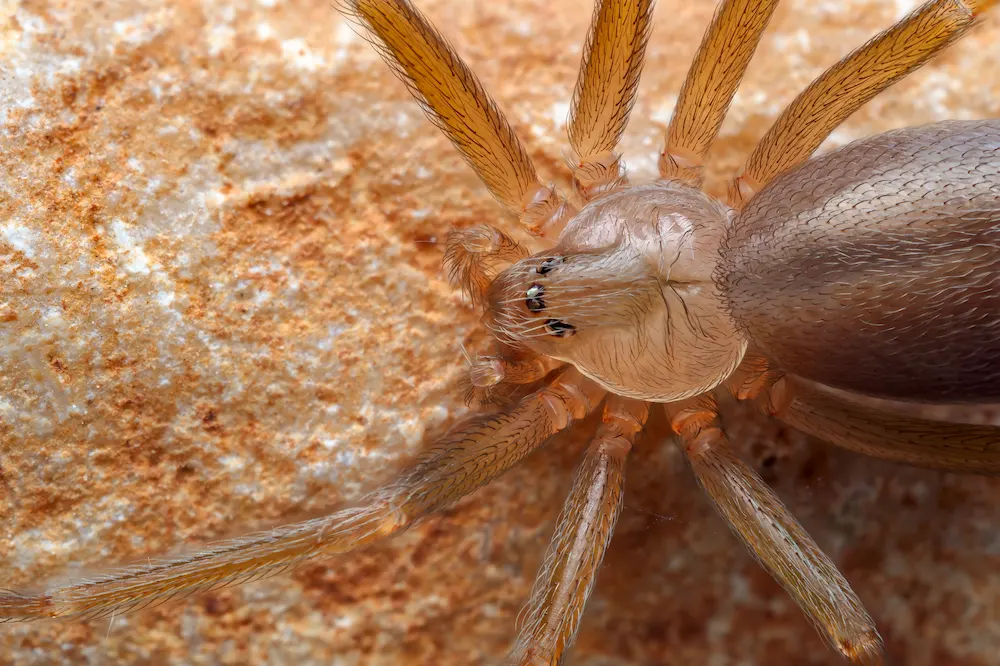
Bites from these spiders are uncommon. They are not aggressive, and most bites happen when a spider gets pressed against skin, such as when someone slides on a glove, pulls on a shirt from a box in the garage, or reaches blindly into a storage bin. Given the chance to run, a recluse spider will almost always take it.
In a home, casita, or workshop where recluse spiders have been confirmed, a few small habits lower the odds of contact. Pull beds a few inches away from the wall, keep blankets from draping onto the floor, and avoid leaving piles of clothes or towels sitting on the ground overnight.
When a bite does happen, the reaction can vary quite a bit. Many are mild, while recluse venom can sometimes cause a slow-healing, necrotic skin wound. How a person reacts depends on several factors, and nobody can predict it from a photo online.
Plenty of skin wounds that get blamed on recluse bites turn out to be something else entirely, including infections that need very different care. That is why anyone with a suspected bite should see a doctor rather than guess. If the spider can be safely captured in a sealed container, bringing it along can help with identification.
Making Your Property Less Appealing to Recluse Spiders
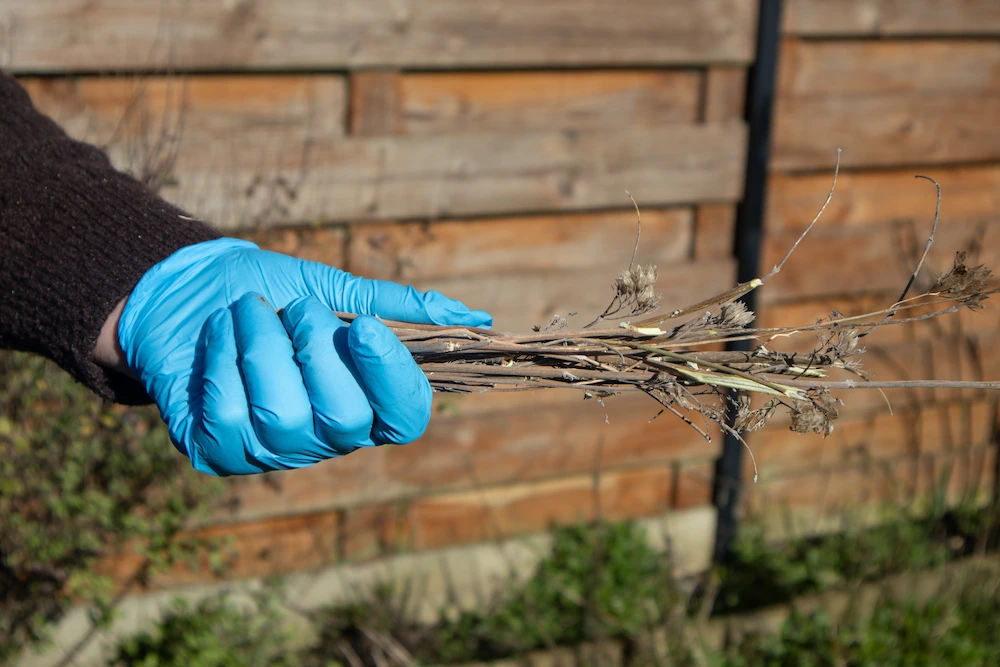
Since these spiders want shelter and a steady supply of insects, the best prevention removes both. Start outside. Clear rock piles, dead plant debris, and scrap wood from around the foundation and along block walls, and keep firewood raised off the ground and well away from the house. Wear gloves when moving anything that has been sitting for a while.
In the garage and shed, lidded plastic bins hold up far better than cardboard, which gives spiders endless folds to hide in. Shake out shoes, gloves, and clothing that have been stored there before putting them on. Sticky traps placed along walls and behind storage are a simple way to see what is moving around at night, and they often catch the crickets and other insects that brown spiders feed on.
Keeping insect activity down around the house matters just as much, because fewer insects means less reason for a hunting spider to stick around. Sealing gaps under doors and around utility lines helps on both fronts. When spiders keep turning up despite those steps, spider control in Chandler starts with an inspection to identify the species and find where they are nesting.
Respect, Not Panic, for the Desert Recluse
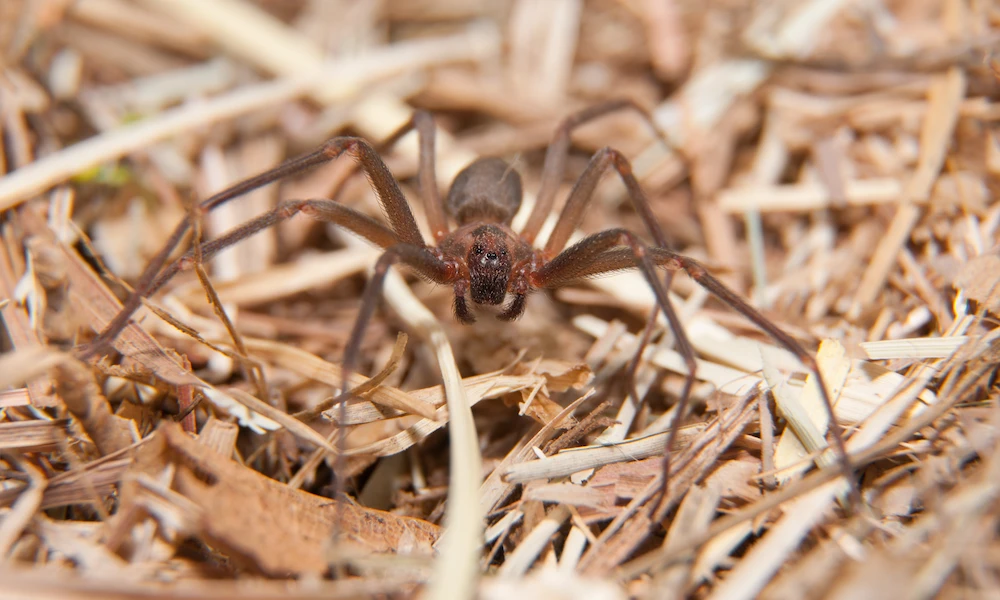
The Arizona brown spider is a shy, night-roaming relative of the brown recluse that prefers packrat nests, woodpiles, and quiet storage over your living room. Bites are rare and should always be checked by a doctor, but most encounters can be avoided by cutting down on clutter, debris, and the insects these spiders hunt.
Seeing more brown spiders than you are comfortable with around a block wall or in the garage? Homeowners in Casa Grande, Chandler, and across the Valley can reach out to Green Mango to have the property inspected and get a clear picture of what is living there. Contact us for a free quote today!
Citations
The Arizona brown spider. (2014, May 6). University Termite & Pest Control. Retrieved October 8, 2026, from https://bepestfree.com/arizona-brown-spider/