
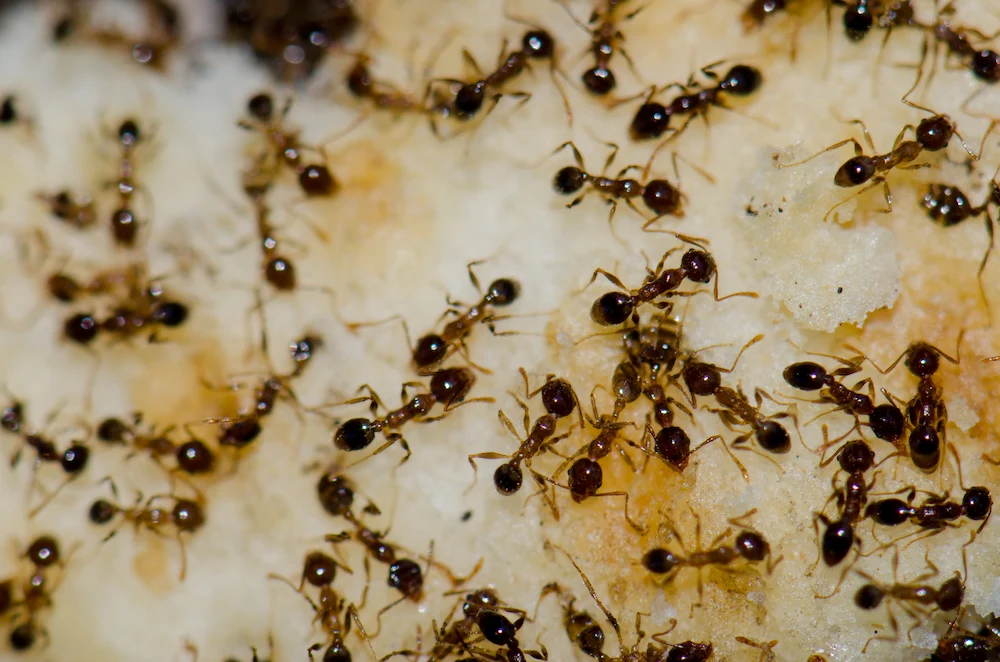
Summary: Argentine ants form cooperative colonies with multiple queens and interconnected nests. This blog explains Argentine ant colony structure, supercolonies, and the behavior that allows them to spread rapidly.
Many ants live in highly organized colonies, but Argentine ants take this structure to another level. Their social system, reproduction habits, and cooperative behavior allow them to build massive populations that spread quickly across neighborhoods and urban environments.
What makes Argentine ant colonies especially unusual is that they do not function as isolated nests like most other ants. Instead, they operate as connected networks of colonies that cooperate with one another rather than competing for territory. This unusual structure gives them a major advantage when establishing themselves in residential areas.
Understanding how these ants organize their colonies explains why they can become persistent pests once they move into a yard or home.
How Argentine ant colony structure differs from most ant species
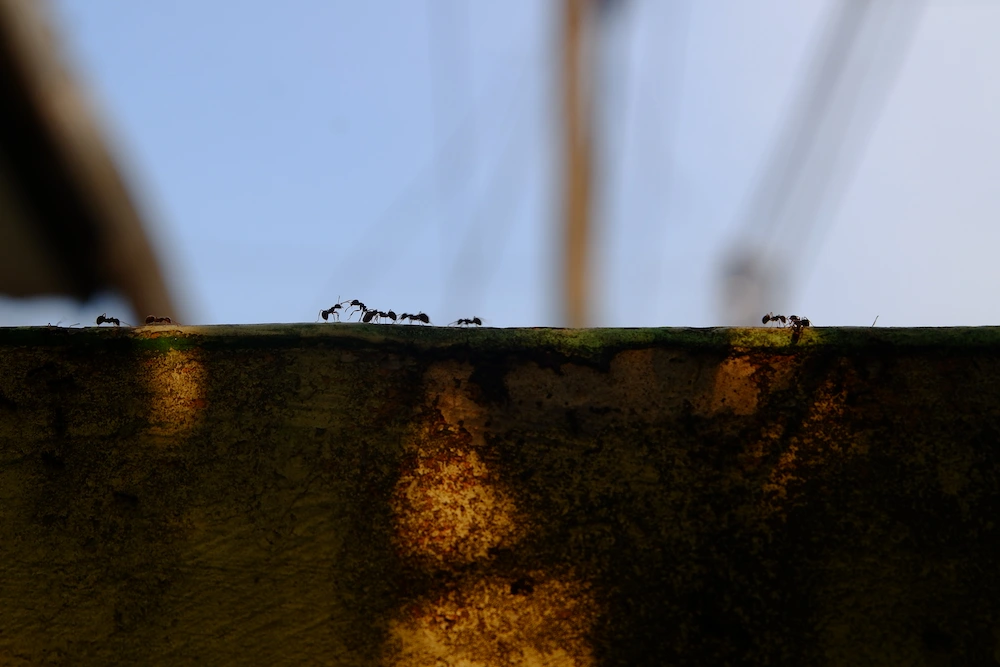
Most ant species operate under a straightforward hierarchy. A single queen produces offspring while worker ants gather food, protect the nest, and care for larvae. Neighboring colonies of the same species often compete aggressively and defend their territory from rivals.
The Argentine ant colony structure breaks these typical rules. Instead of isolated colonies competing with one another, many nests work together as part of a larger cooperative population. Workers can move freely between nests and share resources.
Because there is little internal conflict between nests, the colony network can expand outward more efficiently. New nests form close to existing ones, and the population gradually spreads across landscapes without the usual territorial battles that limit other ant species.
This cooperative structure is a major reason Argentine ants can dominate environments once they establish themselves.
Why Argentine ants have multiple queens
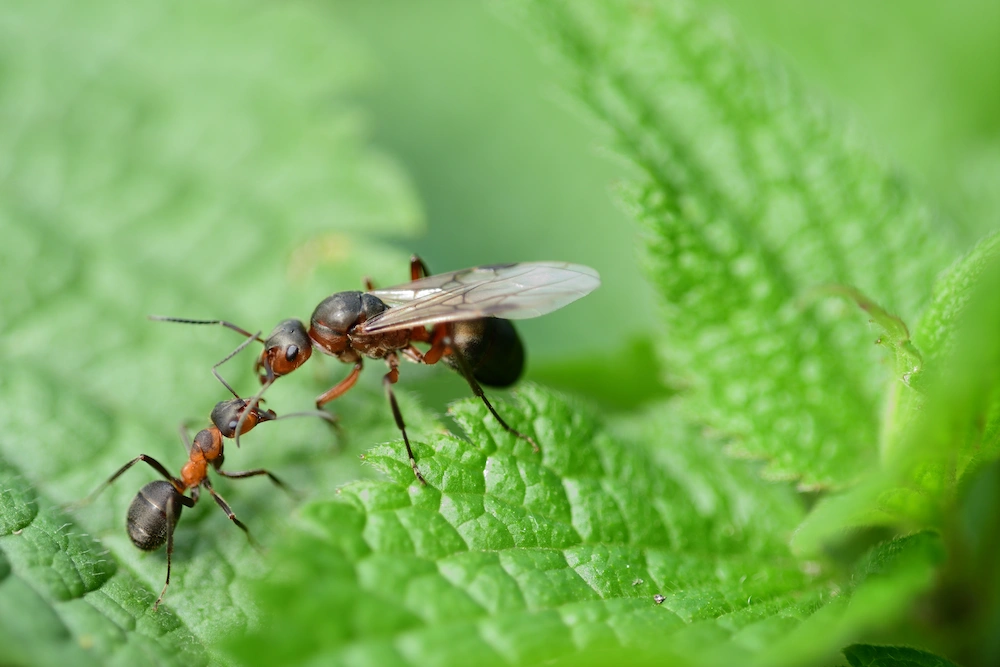
Another defining feature of these ants is their reproductive system. Unlike most ant colonies that rely on a single queen, Argentine ants often maintain several queens in the same colony.
Understanding why Argentine ants have multiple queens helps explain their rapid expansion. Each queen is capable of laying eggs, which means reproduction occurs continuously throughout the colony network. If one queen dies or becomes less productive, others continue producing offspring.
This redundancy makes the colony far more resilient than species that rely on a single reproductive individual. It also allows colonies to split and expand without disrupting the population.
When the colony becomes large enough, groups of workers escort one or more queens to a nearby location where they establish another nest. This gradual expansion allows Argentine ants to spread steadily across properties and neighborhoods.
Argentine ant queen structure and colony growth
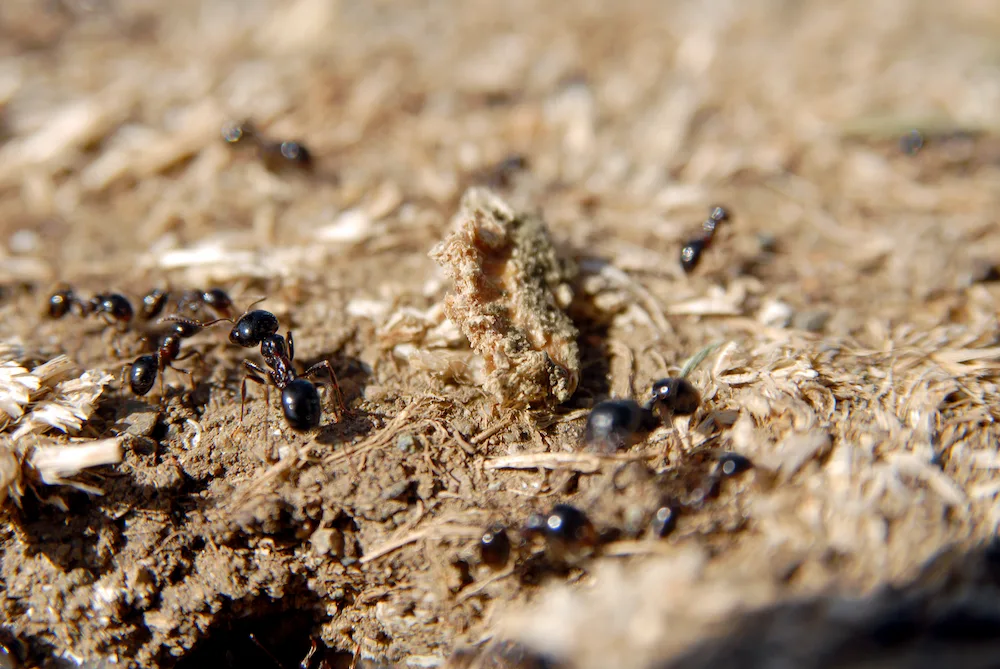
The Argentine ant queen structure is built around cooperation rather than dominance. Multiple queens share the same nest while worker ants support the colony by collecting food and maintaining the nest environment.
Because several queens can produce eggs simultaneously, population growth remains consistent. Even small colonies can expand rapidly when conditions are favorable.
Rather than relying on large mating flights like many ant species, Argentine ants often expand through a process called budding. During budding, a portion of the colony moves a short distance away with one or more queens and establishes a new nest nearby.
This expansion method allows colonies to grow outward in stages, creating clusters of nests that remain connected through worker movement and shared resources.
Argentine ant supercolonies and their enormous scale
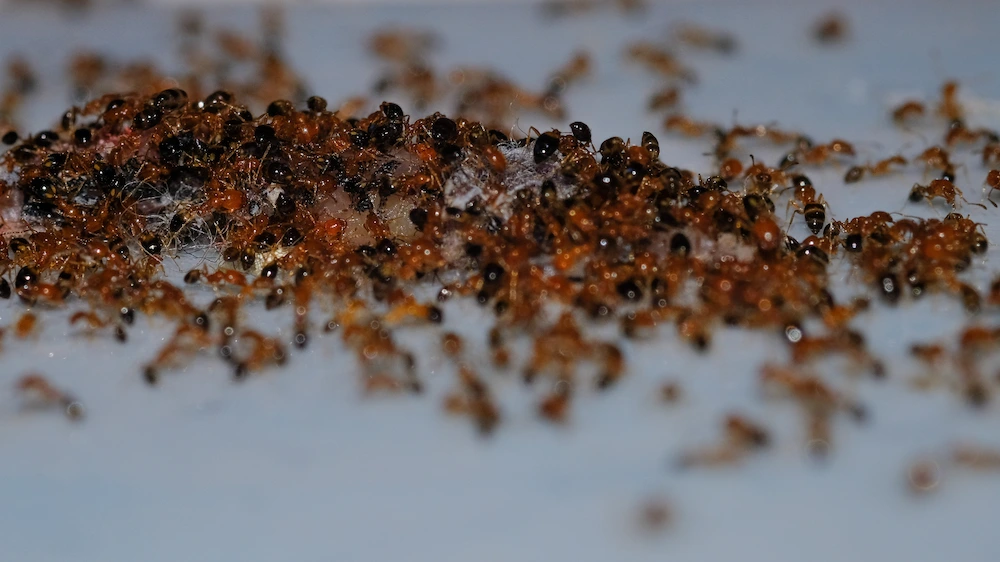
One of the most remarkable aspects of this species is the development of Argentine ant supercolonies. These supercolonies consist of vast networks of cooperating nests that stretch across large geographic areas.
Unlike many ants that aggressively attack members of neighboring colonies, Argentine ants from the same population often recognize each other as allies. Workers from different nests may freely mix without fighting.
Because of this cooperation, thousands of nests can function together as a single enormous colony system. Researchers have discovered supercolonies that extend across cities and even entire regions.
These massive colony networks allow Argentine ants to outcompete many native ant species, which is one reason they are considered one of the most successful invasive ants in the world.
Argentine ant behavior and how they invade homes
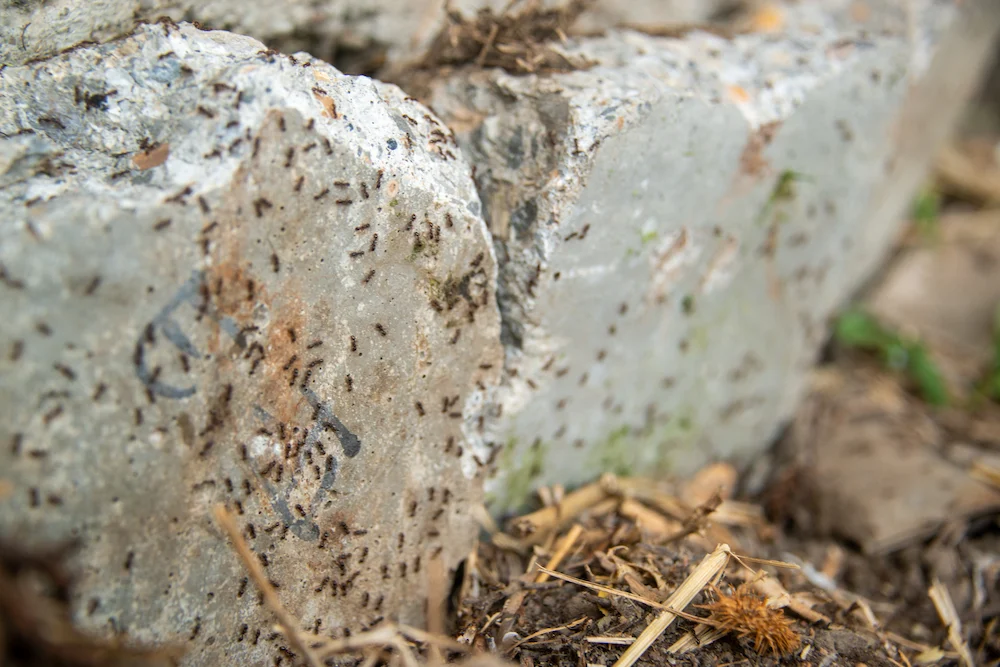
The foraging patterns of Argentine ant behavior are highly organized. Workers communicate using chemical scent trails that guide other ants directly to food sources.
Once a worker finds food, it leaves a trail that signals other ants to follow the same route. Within a short time, long lines of ants may appear moving between a nest and the food source.
Argentine ants are particularly attracted to moisture and sugary foods. Kitchens, bathrooms, and areas around plumbing often become frequent foraging zones when colonies are nearby.
Because these ants rely heavily on communication trails, even small crumbs or spills can attract large numbers of workers into a home.
Why Argentine ants are so persistent around properties
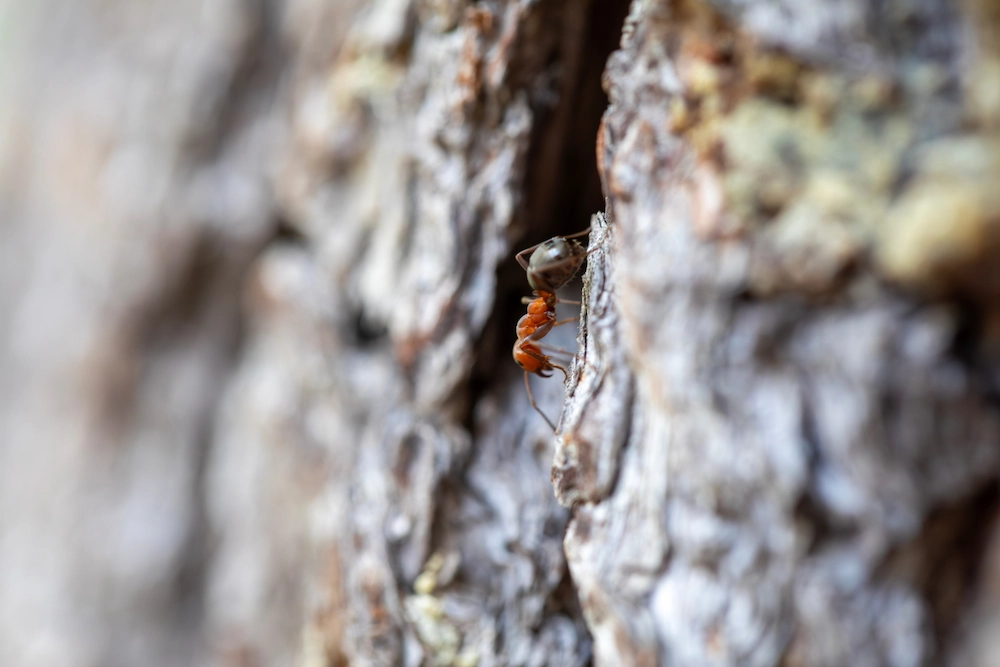
Several characteristics make Argentine ants difficult to manage once they establish themselves.
First, multiple queens ensure that reproduction continues even if some queens are removed. Second, the budding process allows colonies to spread into new areas without needing long-distance mating flights.
Another challenge is the cooperative nature of their colonies. Because nearby nests support each other, eliminating one nest rarely removes the entire population. Workers from neighboring nests may quickly replace those that are removed.
This combination of rapid reproduction, colony cooperation, and steady expansion explains why Argentine ants can persist around homes for long periods if not properly managed.
What homeowners can do to discourage Argentine ants

While large colonies can be difficult to eliminate completely, homeowners can reduce the likelihood of ants entering their homes by focusing on sanitation and exclusion.
A few simple adjustments can make a property less attractive to foraging ants.
- Wipe up sugary spills and food residue quickly
- Store pantry foods in sealed containers
- Repair plumbing leaks that create moisture sources
- Seal cracks and gaps around windows and foundations
- Trim plants and branches touching exterior walls
These steps help limit the food and moisture that attract ants indoors.
If ant activity continues despite these measures, professional pest control services may be necessary to target the larger colony network surrounding the property.
Understanding the strategy behind Argentine ant success
Argentine ants are remarkably successful because their social system removes many of the limitations that restrict other ant species. Multiple queens maintain constant reproduction, interconnected nests cooperate rather than compete, and budding allows steady expansion across new areas.
These traits allow Argentine ant colonies to grow into large, coordinated populations capable of dominating landscapes and invading homes in search of food and moisture.
Recognizing how these ants organize themselves can help homeowners understand why infestations develop and why early prevention is important for keeping them under control. Contact us for a free quote today!
Citations
Argentine ant, Linepithema humile. (n.d.). Texas A&M Forest Service. Retrieved March 12, 2026, from https://urbanentomology.tamu.edu/urban-pests/ants/argentine/